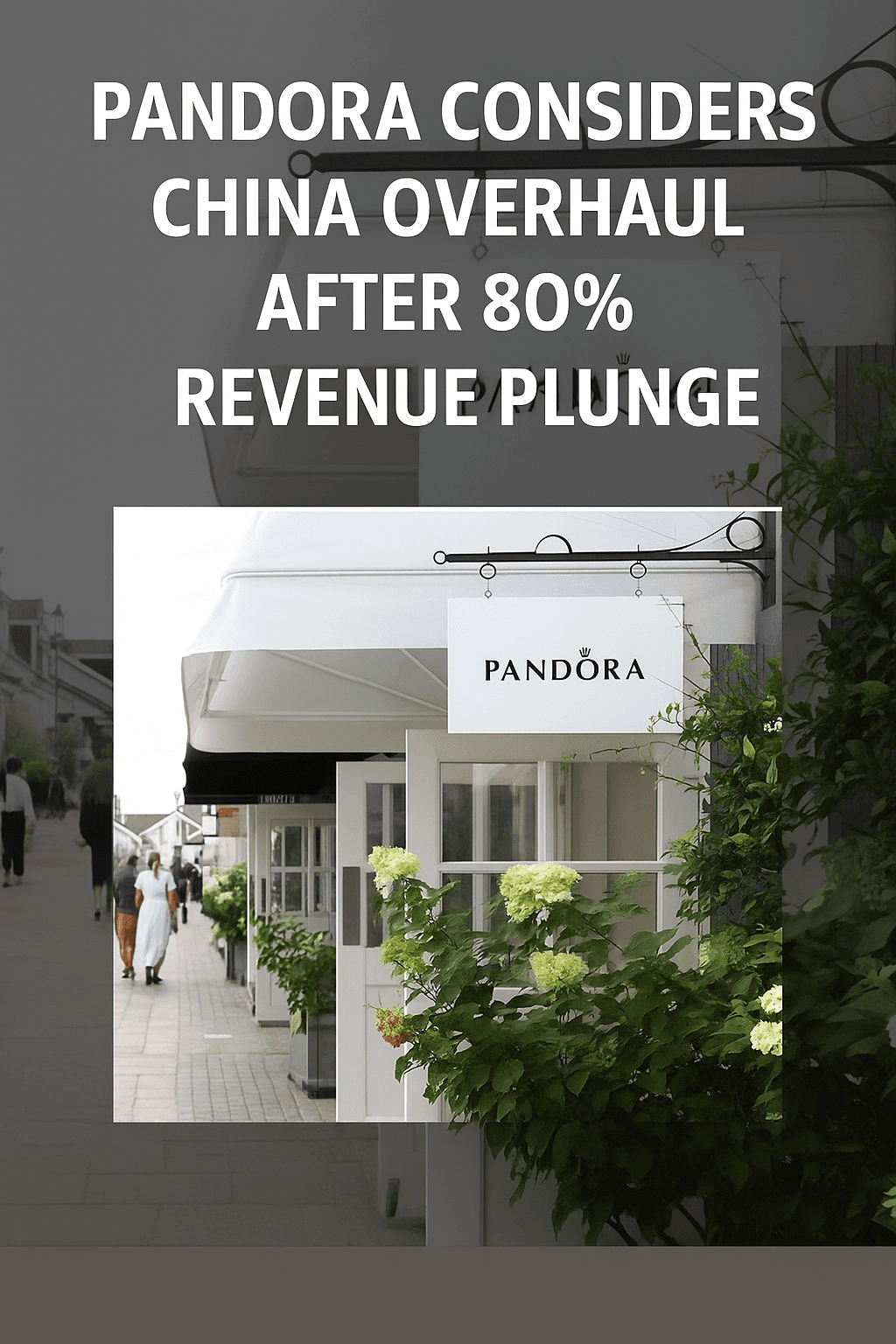
Pandora Considers China Overhaul After 80% Revenue Plunge

Jewelry giant explores licensing strategy amid fierce local competition, economic slowdown
COPENHAGEN / SHANGHAI — Danish jewelry powerhouse Pandora is weighing a strategic pivot in China, following an 80% revenue decline over five years. According to individuals familiar with the matter, the company is in talks with Chinese e-commerce partners and investment funds to license its brand and inventory, signalling a major shift in how the world’s largest jeweler by volume operates in the region.
“China is the biggest jewelry market in the world, and we remain fully committed to the business there,” Pandora said in a statement to Reuters, acknowledging that a brand repositioning is underway and warning that “it will take time.”
Licensing Move Could Reshape Pandora’s China Presence
Pandora is reportedly exploring a five-year licensing model that would allow local partners to manage operations — including e-commerce, inventory, and retail strategy — while the Danish firm retains brand ownership. Industry insiders say this could mirror Baozun’s acquisition of Gap China, a deal that allowed a domestic operator to revamp a struggling Western brand.
Pandora’s China revenue dropped from 1.97 billion Danish crowns in 2019 to just 416 million in 2024 — a staggering fall that slashed the country’s share of global revenue from 11% to 1%, according to Pandora investor filings.
Meanwhile, online sales have fared even worse than in-store performance, suggesting deeper issues in digital engagement and brand relevance.
“I don’t think financial investors are going to be interested in this asset,” said Jonathan Yan, a principal at Roland Berger Shanghai. “However, e-commerce firms seeking high-margin brand ownership may be interested.”
Economic Headwinds and E-Commerce Shakeup
The company’s struggles in China reflect broader challenges faced by multinational brands post-pandemic. Analysts cite consumer fatigue, a slowing real estate sector, and rising demand for gold and high-end jewelry as key headwinds.
Adding to the pressure is stiff competition from local players in China’s massive online retail market. Pandora’s digital performance has fallen behind in key marketplaces like JD and Tmall, where nimble domestic brands dominate with trend-driven, high-conversion listings.
Pandora has already cycled through three managing directors in its China unit since 2022. Current MD Thomas Knudsen, who took charge in January 2025, recently announced plans to shut 50 physical stores in China this year.
“They will need to burn money and have a very innovative approach — and even then, it won’t be easy,” Yan added.
What It Means for Online Shoppers
For shoppers seeking authentic Pandora jewelry, especially in China, this shift raises concerns around brand consistency, fulfillment standards, and customer service. If licensing goes forward, consumers may find varied experiences depending on which operator handles local fulfillment and e-commerce channels.
Pandora's global reputation for quality remains strong, but its local execution will matter more than ever. Shoppers should continue purchasing through Pandora’s official site or verified flagship stores on JD and Tmall to ensure product authenticity and access to warranty protections.
SHARE THIS ARTICLE





READ MORE