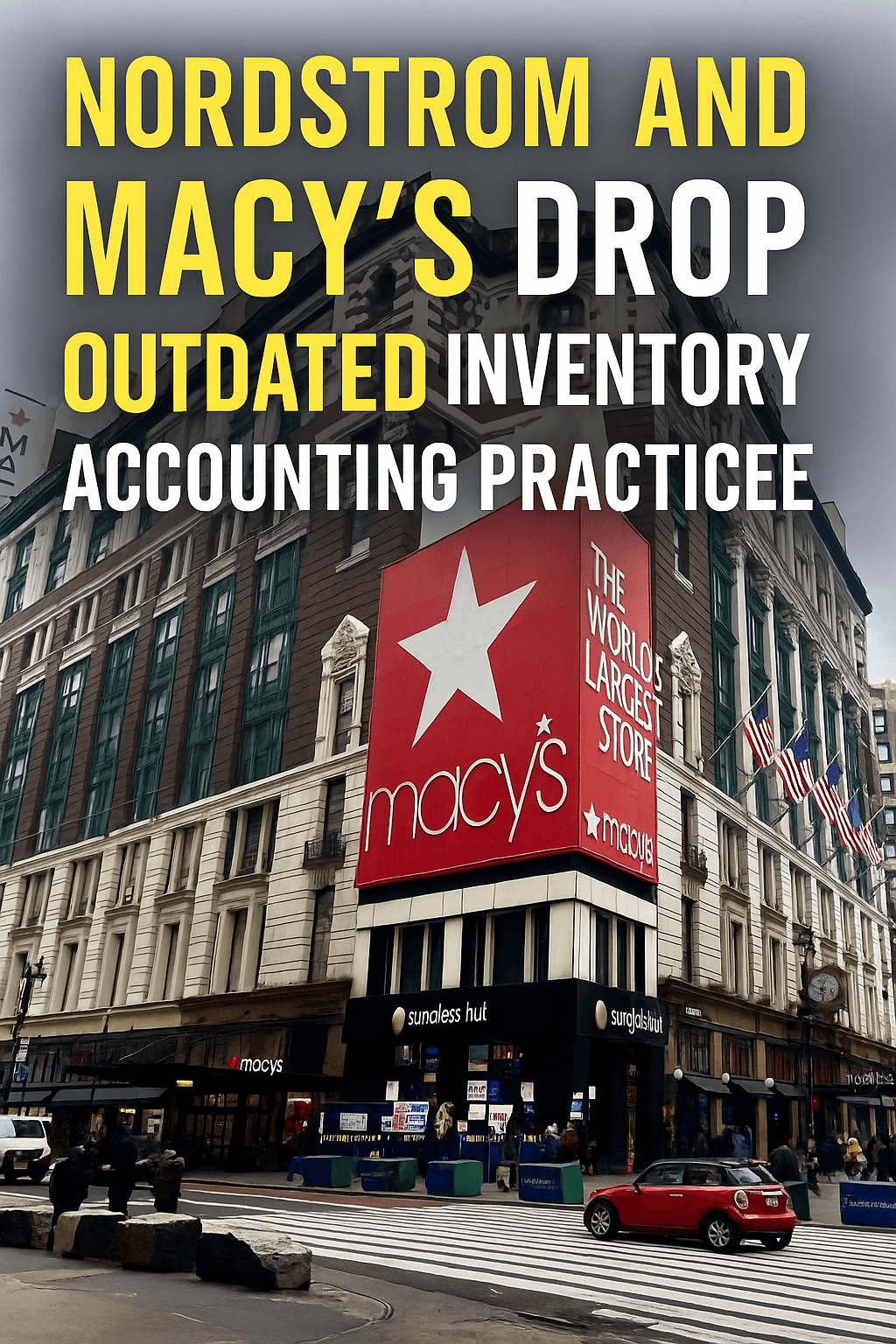
Nordstrom and Macy’s Drop Outdated Inventory Accounting Practice in Bid for Modern Retail Clarity

In a significant shake-up to back-end retail strategy, Nordstrom and Macy’s have officially ditched the long-used Retail Inventory Method (RIM) in favor of cost accounting, embracing modern technology to streamline operations, clarify shrink, and sharpen pricing decisions.
For decades, RIM allowed major U.S. retailers to estimate inventory using retail prices rather than actual costs. But this 1920s-era method, invented by retail scholar Malcolm McNair, is increasingly seen as outdated and inaccurate in today’s data-driven retail environment.
"The retail inventory method is a more manual process, designed when we didn’t have barcodes or computers," said Oliver Chen, Managing Director and Senior Equity Research Analyst at TD Cowen.
According to financial experts, RIM often leads to distorted business metrics, encourages questionable buying behavior, and complicates shrink analysis. Macy's and Nordstrom's moves away from RIM underscore a broader industry trend: retailers upgrading to cost accounting systems that reflect true inventory value.
"This shift to operating in units and cost lays the foundation for us to deliver on our business priorities more effectively," said Cathy Smith, CFO at Nordstrom.
Macy’s CFO and COO Adrian Mitchell echoed the sentiment in a February analyst call, saying the conversion "means better decision-making around buying and selling."
The Case Against RIM
Despite being GAAP-compliant, RIM's reliance on markdowns and promotions to calculate inventory creates a flawed picture of what's truly in stock. Under RIM, markdowns lower the value of remaining inventory, which can prompt unnecessary reorders.
"In RIM accounting, if you take a markdown, you devalue your inventory," said Kelly Pedersen, PwC's global retail leader. "That means you have less inventory, and that means, based on your plan, you can receive more inventory."
This kind of circular logic leads to inventory bloat, outdated product assortments, and unnecessary discounting, all of which affect customer experience and profitability.
Benefits of Cost Accounting
Cost accounting anchors inventory value to what was actually paid for the goods, regardless of current retail price fluctuations. This offers clearer insight into margins and helps reduce loss from overstocking or inaccurate shrink metrics.
"A cost-accounting method would probably be better operationally to address that shrink issue," noted Joe Schmitt, Managing Director at Berkeley Research Group.
Nordstrom and Macy's have already reported improved operational clarity and better control over gross margin return on inventory (GMROI) since switching. Retailers can now measure item-level performance and execute markdowns without skewing financial data.
What This Means for Shoppers
For savvy online shoppers and CouponOutlet readers, this shift could mean:
More accurate product availability
Fewer pricing games with misleading markdowns
Better pricing strategies as retailers rely on actual margins
In short, the adoption of cost accounting enables retailers to present more reliable deals and improve the authenticity of their discounts—a win for customers looking for honest value.
Conclusion
As the retail landscape evolves, Nordstrom and Macy’s are leading the charge away from legacy accounting systems and toward data-enhanced transparency. With cost accounting, shoppers may soon notice more consistent inventory, honest markdowns, and smarter deals across major retailers.
SHARE THIS ARTICLE





READ MORE