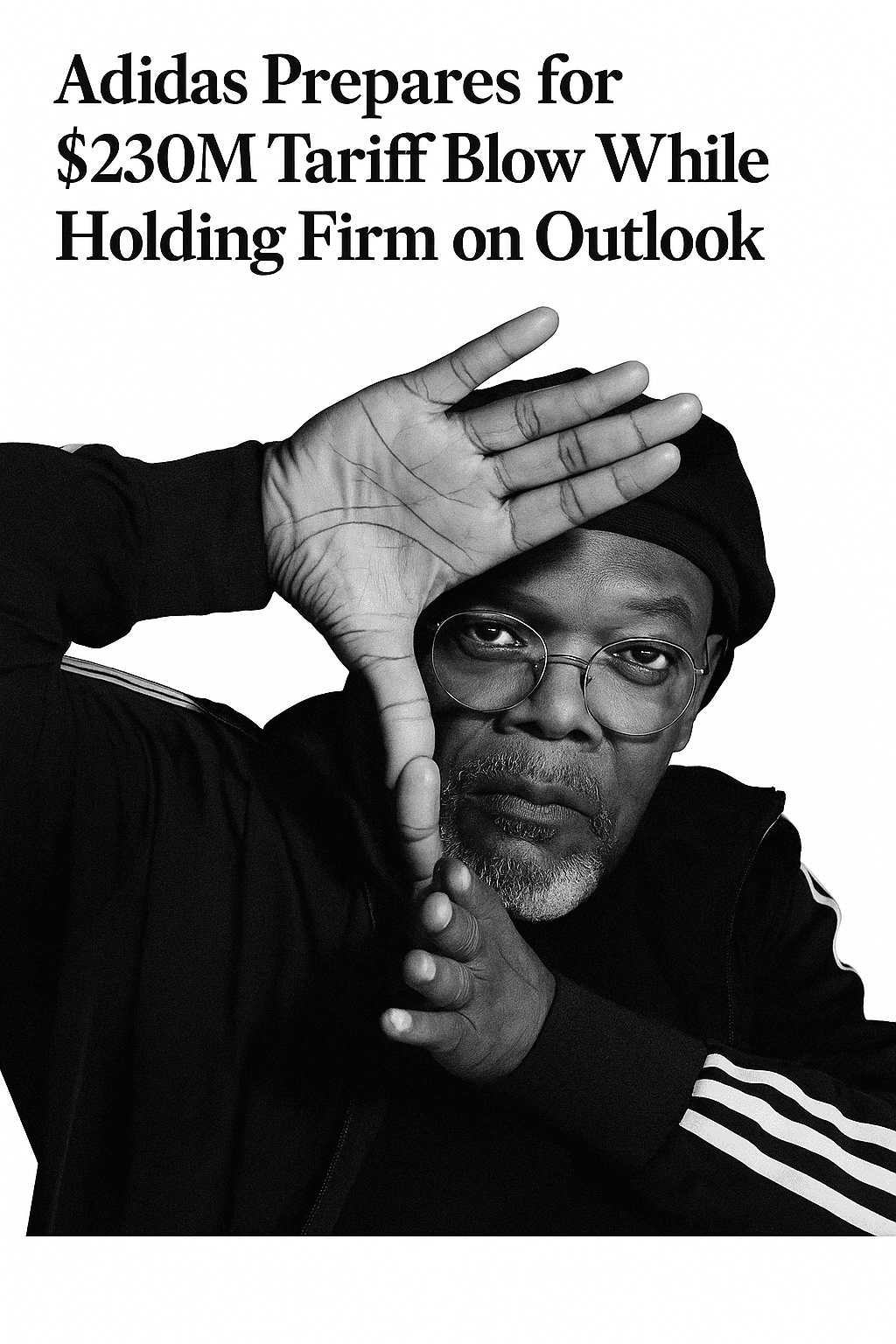
Adidas Prepares for $230M Tariff Blow While Holding Firm on Outlook

Adidas is preparing for a €200 million (approximately $230 million) tariff-related hit in the second half of 2025 but has reaffirmed its full-year outlook as strong consumer demand and localized strategies offset mounting cost pressures.
The German sportswear giant reported second-quarter revenues of around €6 billion, a 2% increase year-over-year. On a currency-neutral basis, sales jumped 12% excluding the impact of discontinued Yeezy products, and 8% including them. The brand continues to benefit from robust demand in lifestyle footwear, apparel, and growing traction in the U.S. market.
“While we are seeing macroeconomic and geopolitical headwinds, our product momentum and brand relevance remain strong,” Adidas CEO Bjørn Gulden said during Wednesday’s earnings call. “We are not pulling back. We are not canceling orders. The consumer appetite is still there.”
Holding the Line Despite Tariffs
Adidas is one of many retailers bracing for cost pressures stemming from new and existing U.S. tariffs. However, Gulden said Adidas would avoid directly passing those costs on to consumers outside the U.S. and would share the burden across suppliers, retailers, and product strategies.
“We will not try to take the tariffs in the U.S. and then put them on the prices in Germany,” Gulden stated. Instead, the company plans to introduce higher-priced product drops — a tactic that absorbs cost hikes more subtly.
This contrasts with rivals like Nike and Puma, which are facing demand softness and have either guided lower or pulled back on inventory. Adidas, by contrast, has doubled down on marketing and has yet to see a significant shift in U.S. consumer behavior.
“We haven’t seen the demand in the U.S. going down yet,” Gulden added. “But the price increases haven’t hit either.”
Product Momentum and U.S. Expansion
The brand is currently relaunching its iconic Superstar sneaker, supported by collaborations and marketing activations — a move analysts believe will fuel further demand in the lifestyle segment. Low-profile sneakers and Originals lines continue to drive performance.
“Adidas is seeing strong appetite in both performance running and lifestyle categories,” said Tom Ljubojevic, apparel analyst at GlobalData. “Its ability to supply and relaunch hit products like the Tokyo and Japan styles is proving key.”
In the U.S., Adidas is doubling down on local strategies. The company has recently expanded its investment in American athletes and plans to deepen its involvement in college sports. It’s also jumping on regional sports trends like pickleball in the U.S. and padel in Europe — moves that resonate with local consumers and open new retail opportunities.
Apparel grew 17% in Q2 on a currency-neutral basis, outpacing footwear’s 9% increase and accessories' 7% growth.
What It Means for Shoppers
While Adidas plans to release some products at higher price points, everyday shoppers may still find prices stable across many categories. The brand's strategy to absorb or balance tariffs rather than apply broad hikes could mean more reliable pricing for U.S. consumers, at least in the near term.
Still, customers should remain alert to changes in release schedules, pricing tiers, and product availability, especially on high-demand items.
CouponOutlet recommends monitoring upcoming Adidas sales and checking verified retailers for trustworthy discounts.
SHARE THIS ARTICLE




READ MORE